
Climate-Resilient Agriculture and Youth Entrepreneurship: A New Pathway for Sustainable Development in Bangladesh
A transformative development concept is emerging in Bangladesh that brings together climate adaptation, safe food production, youth entrepreneurship, women’s empowerment, and export development through innovative Polynet House technology.
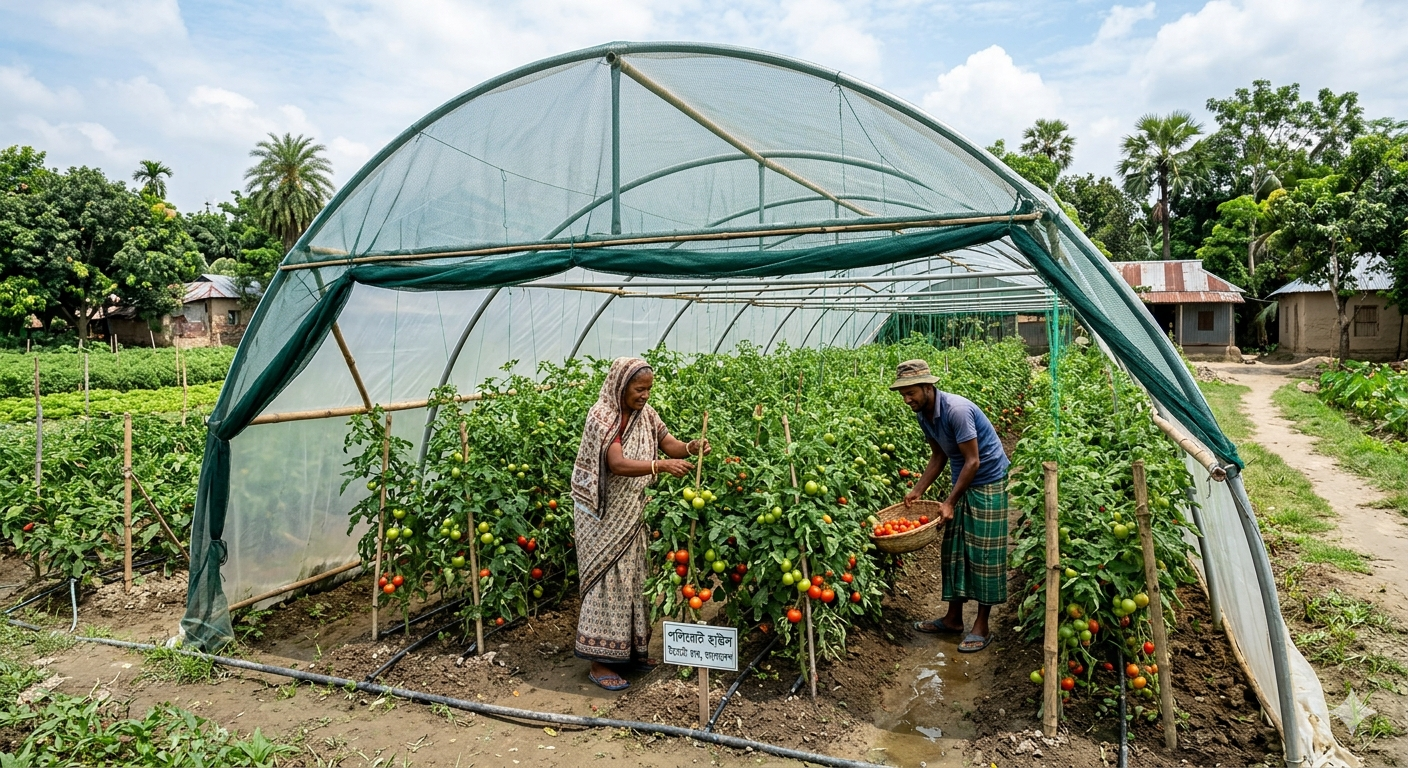
Polynet Houses are enabling farmers to produce pesticide-free, high-value crops throughout the year while reducing climate-related production risks. Successful cultivation of capsicum, strawberry, tomato, flowers, and other premium crops has already demonstrated strong market potential, with selected products beginning to reach international markets, including the Middle East.
The initiative proposes the establishment of Climate Smart Youth Agri-Entrepreneur Hubs, where young entrepreneurs will receive technical training, business development support, safe food certification, and market linkage opportunities. Parallel programs will promote women-led safe food production clusters, creating sustainable income opportunities and strengthening household-based enterprises.
Additional components include climate-resilient school farms to enhance nutrition and climate education, QR code-based traceability systems to ensure food safety and consumer confidence, and targeted interventions in coastal regions vulnerable to salinity, flooding, and extreme weather events.
The concept also integrates innovative climate-smart technologies such as drip irrigation, rainwater harvesting, and solar-powered production systems, contributing to water conservation, reduced carbon emissions, and access to climate finance opportunities.
Under the proposed “Climate-Resilient Safe Food and Export Agriculture Initiative through Polynet House Technology,” Bangladesh has the opportunity to strengthen climate resilience, create green jobs, empower women and youth, improve food safety, and expand agricultural exports—aligning closely with the priorities of international development partners and climate-focused funding agencies.


